What is it?

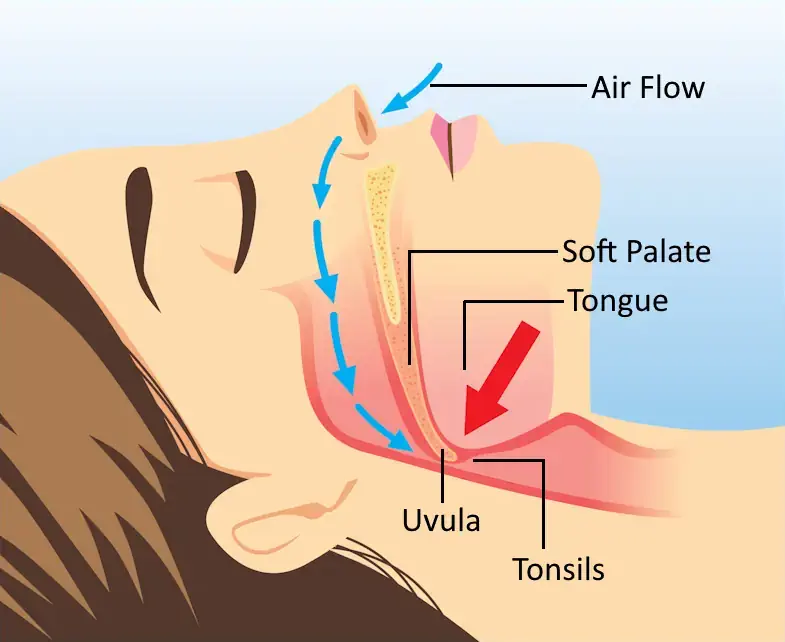
Every year, 7 million Americans are diagnosed with sleep apnea. Sleep apnea is a sleep disordered breathing condition where your airway closes and your body cannot breathe. “Apnea” is clinically defined as a 10 second period without airflow. There are two types of sleep apnea: obstructive sleep apnea and central sleep apnea.   In simple terms, obstructive sleep apnea is when your body cannot breathe normally due to a blocked airway and central sleep apnea is when your brain does not send proper signals for your body to breathe. Current estimates show 20% of people suffer from obstructive sleep apnea. However, most experts believe the number is far greater as sleep apnea often goes undiagnosed.

diagram showing closed airway for breathing

Signs and Symptoms

Those that suffer from sleep apnea often show symptoms of snoring, witnessed choking or gasping for air, frequent awakenings, headaches, and excessive daytime sleepiness. Untreated sleep apnea over a long period of time can lead to serious health problems such as: high blood pressure, diabetes, heart disease, dementia, erectile dysfunction, and has even been linked to fibromyalgia. Sleep apnea is also a genetic condition. Most victims of sleep apnea, often have one or both parents who also suffer from sleep apnea.

Diagnosis and Treatment

Any dentist or physician can screen for sleep apnea, however a board-certified sleep physician diagnoses sleep apnea.   The first step in obtaining a diagnosis involves having a sleep study. Sleep studies come in two varieties: home and lab. The sleep study records vital information about your body while you sleep, and the physician interprets the information to determine the severity of the sleep apnea. Treatment ranges from something as simple as an appliance you wear in your mouth to several different surgery options. Begin the dialogue with your doctor or dentist if you or a loved one suffers from any of the signs or symptoms listed above. Access to care is becoming much easier and treatment is often covered by your medical insurance.


According to the National Sleep Foundation, over 18 million Americans suffer from obstructive sleep apnea (OSA) every day. Sleep apnea is one of the most underdiagnosed disorders today, meaning those numbers could be much higher. Many myths surround this disorder leaving people unaware of the true symptoms and dangers of sleep apnea. It’s important to know the myths from the facts, as it might be you who suffers from this serious disease. Let’s take a look a look at a few myths surrounding sleep apnea.


Myth # 1: Snoring is not dangerous

Obstructive Sleep Apnea (OSA) is a sleep disorder that results in the temporary slowing or stopping of breathing while you sleep. Snoring is among the most common symptoms of OSA. In most cases, when you experience an apnea event your body will jolt you awake with a loud snort or gasping sound to shock you back into breathing. These events happen for the same reason snoring occurs; your airway is obstructed, thereby limiting oxygen from reaching the brain. It is also important to note that not all people who snore suffer from OSA. Untreated obstructive sleep apnea can lead to very dangerous and life threatening health risks.

Myth # 2: Only overweight, middle-aged men have sleep apnea

This myth could not be less true. Sleep apnea affects both men, women and even children of all ages and sizes. However, women are 8 times less likely to be diagnosed than men. Women who complain of low energy or fatigue are more likely to be prescribed prescription medication for depression. On the contrary, men are often sent for a sleep study for evaluation.  If you are experiencing snoring, daytime fatigue, lack of energy, morning headaches or unrefreshing sleep, you should ask your doctor about getting a sleep study to rule out OSA.

Myth # 3: CPAP is the only treatment for sleep apnea

While CPAP therapy is the most common treatment for sleep apnea, it may not be the right solution for you. The use of a mask or nasal pillows at night can be uncomfortable and many will abandon CPAP treatment due claustrophobia, loud machine noise, bed partner complaints, anxiety, or travel inconvenience. The American Academy of Sleep Medicine (AASM) also recommends treating obstructive sleep apnea using a dental device. This treatment is known as Oral Appliance Therapy (OAT). Oral Appliance Therapy is an effective treatment option for both snoring and obstructive sleep apnea.  It fits like an athletic mouthguard or orthodontic retainer. The oral appliance works by guiding the jaw in a forward position to help maintain the airway open, essentially eliminating snoring and airway obstructions.   Research shows that more than 90% of patients report compliance using an oral appliance. Drs. Jason Hui and Alan McDavid have the passion and experience to customize the ideal dental device for you! Contact us today at 469-712-6865 to find out how you can start treatment today!


The earth revolves around the sun creating a period of sun light and darkness.  This cyclic pattern separates our days into daytime and nighttime.    Our bodies developed a daily rhythm that functions within the earthy cycle, known as the circadian rhythm.  The circadian rhythm relies on the sunlight and lack of sunlight in order to regulate our sleep and wake periods.  When the sun sets, our brain begins to release chemicals that prepare your body for sleep.  Once asleep, your bodies will undergo various stages and cycles.
 

REM Sleep

Sleep is divided into two distinct periods referred to a REM (Rapid Eye Movement) and nREM (non-rapid eye movement).  What does eye movement have to do with sleep?   Just as the name suggests, REM sleep is the period of your sleep where your eyes move swiftly in a side to side pattern.  This is a distinguishing feature, because also during this period everything else in your body, except respiration, remains paralyzed.  REM sleep is the stage where you experience vivid dreams, problem solve, and brain refreshes itself, and should account for 20-25 % of your total sleep time.  The REM cycles become more frequent and longer as your sleep time becomes longer.  Lack of REM sleep over time may cause mental impairment such as memory loss, dementia, confusion, and has even been linked with Alzheimer’s disease.  
 

nREM Stage 1

Non-REM sleep is broken into several different stages.   In stage one, your muscles begin to relax and your body temperature drops.  You begin to drift in and out of wakefulness.  Stage 1 sleep usually accounts for 4-5% of total sleep time.  This percentage increases as we get older.  
 

nREM Stage 2

During stage two sleep, transition sleep, your heart rate begins to decrease along with the brain waves.  Your body prepares for the next and final stages of nREM sleep.  This period usually accounts for 45-55% of total sleep time.  Short “power naps” will often involve stages 1 and 2 of nREM sleep and can enhance concentration, mood, and sharpen motor skills.  
 

nREM Stages 3 and 4

This period is commonly referred to as delta or slow wave sleep.  The name is derived from the frequency of the brain waves. During this phase, the brain waves become slower in frequency and larger in amplitude.  It’s difficult to waken someone within this period, or if awaken, they may seem disillusioned or confused.  This period is critical in children and can account for as much as 50% in their total sleep time.  This period decreases as we age and eventually becomes absent.  
 

Sleep Interrupted

Are you finding yourself waking up multiple times in one night?  If any period of your sleep cycle is disrupted, it can have consequences to your health.  Sleep essential your daily healing and recovery.  During sleep, your body relies hormones and chemicals helping to repair itself and restore energy.  Breaks in this cycle and lack of sleep can result in chronic inflammation and fatigue.  Lack of sleep has been linked to serious health problems such as diabetes, high blood pressure, dementia, fibromyalgia, head and neck pain, and sexual dysfunction.   If you or a loved one suffers from sleep deprivation, find a sleep specialist nearby to begin the road of recovery and health.

Vitamin D, aka “the sunshine vitamin,” is one of the most essential of vitamins.This super vitamin is responsible for healthy bones. It facilitates the absorption of calcium into bone tissue. Therefore, vitamin D deficiency is often responsible for weak bones. In children, it can lead to a condition known as rickets, where bones become fragile and malformed due to it’s poor mineralization. In adults, poor calcium absorption leads to osteoporosis. Research also shows that vitamin D deficiency puts you at higher risk for developing chronic illnesses including autoimmune diseases, cardiovascular problems, diabetes, and even cancer. Furthermore, researchers attribute vitamin D deficiency to sleep apnea (read article until the end).

Where does vitamin D come from?

There are two main sources of vitamin D. By far, the primary source of vitamin D is our own skin. This mechanism one of the many functions of skin as an organ system. The body is able to synthesize vitamin D through direct exposure to sunlight. The skin utilizes UVB rays from the sun to transform a precursor molecule (7-dehydrocholesterol) into vitamin D3.  It then travels to the kidneys to help reabsorb calcium into the bloodstream for redistribution. That is why daily intake of sunlight and a balanced diet are essential for keeping health bones.

A secondary source of vitamin D is food. For the most part, you may find vitamin D in some fish species. Sardines, Salmon, Mackerel, and Tuna are excellent sources of vitamin D. In addition, you may eat some foods fortified with vitamin D. Examples include, eggs, raw milk, caviar, and mushrooms. Beyond food, you may take vitamin D supplements. Should you suspect vitamin D deficiency, it’s best recommended that you consult your primary care physician before taking supplements. Vitamin D levels should be monitored by a qualified physician.

Causes of Vitamin D Deficiency

Research shows that about 1 billion people worldwide are vitamin D deficient (1). People most prone to a vitamin D deficiency include those who don’t spend enough time outdoors, those who live in areas with poor exposure to sunlight (northern and southern hemispheres), and in people with darker skin or those who wear multiple layers of clothing. Furthermore, you may become deficient if over time you don’t consume the recommended levels. This is especially true for those who keep a low fat diet, those who don’t eat fish, egg yolks, and drink fortified milk.

Vitamin D Affects Our Appetite and How Our Bodies Store Fat

During the summertime, the average person living in the US receives higher doses of sunlight. Therefore, our bodies contain a surplus supply of vitamin D. Researchers suggest that our bodies interpret the surplus of vitamin D as an opportunity to grow muscle and build stronger bodies. As a result, we eat more calories and store less fat. During the wintertime, as the earth tilts on it axis the amount of UVB rays decreases. Consequently, our bodies sleep longer, use less energy, and store fat to get ready for spring. Just like weather apps on smartphones can help us decide what to wear before leaving the house, sunlight “informs” our bodies how to manage our energy supply throughout the day.

Vitamin D Deficiency Has Negative Effects On Sleep

Researchers have concluded that vitamin D may also play a role in sleep. Low vitamin D increases the risk of insufficient sleep (less than 5 hrs a night) and scoring below 70% on the healthy sleep efficiency score. Healthy sleep efficiency is generally considered to be 85% or above. Low scores indicate that sleep may be fragmented and restless, with multiple awakenings throughout the night. Other studies also suggest that people who suffer from sleep apnea may also be vitamin D deficient (2). This is an area of research with a lot of potential. Additional studies to help us understand the relationship between this super vitamin and sleep is forthcoming. Should you suspect to have a sleep disorder, ask your primary care physician to evaluate your risk and get tested if necessary.

  1. F. Holick, Michael. Vitamin D: Evolutionary, Physiological and Health Perspectives. Current Drug Targets, vol. 12, No. 1, January 2011, pp.4-18. (Accessed online on June 20, 2017: http://www.ingentaconnect.com/content/ben/cdt/2011/00000012/00000001/art00002).
  2. Breus, Michael. “Low On Vitamin D, Sleep Suffers.” In Health, How to Sleep Better, February 26, 2016. Accessed online on 6/30/17 (https://www.thesleepdoctor.com/2016/02/26/low-on-vitamin-d-sleep-suffers).

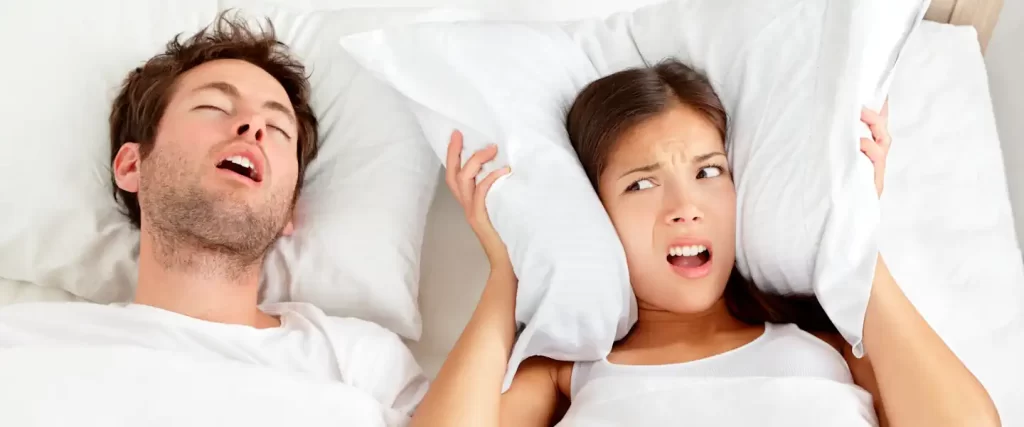
a couple in bed, man is snoring but woman is awake and covering her ears

Snoring… just hearing the word alone is enough to make you cringe with annoyance. But what is snoring? To put it simply, snoring is noisy breathing during sleep. It’s prevalent among people of all ages and it affects both genders. The National Sleep Foundation states that snoring affects approximately 37 million American adults on a regular basis. Therefore, it’s very likely that either you snore or sleep close to someone who does. At any rate, snoring could be a warning signal that something is wrong with your breathing at night. Let’s take a look at what causes snoring.
 

What causes snoring?

Snoring occurs when the air that you breathe vibrates as it passes through different parts of the nose, mouth, and throat. This produces turbulence—a vibrating sound that can range from soft wheezing sounds to loud, roar-like snores. Snoring isn’t normal and it may indicate that your nasal passages are narrow or obstructed. This occurs when you have a deviated septum, enlarged turbinates, deviated septum, enlarged tonsils, oversized tongue, and by a temporary collapse of the muscles surrounding the throat. Other factors that contribute to snoring include, medications, alcohol, physical exhaustion, and sleep position.
 

What is Sleep Apnea and how is snoring related?

Obstructive Sleep Apnea (OSA) is a sleep disorder that results in the temporary slowing or stopping of breathing while you sleep. Snoring is among the most common symptoms of OSA, including daytime sleepiness and fatigue. In most cases when you experience an apnea event your body will jolt you awake with a loud snort or gasping sound to shock you back into breathing. These events happen for the same reason snoring occurs; your airway is obstructed, limiting oxygen from reaching the brain. It is very important to be tested because untreated obstructive sleep apnea can lead to very dangerous and life threatening health risks.
 

Additional Health risks

If you snore and have not seen a doctor for sleep apnea you could be putting your health in serious danger. Research shows that Sleep apnea causes depression, ADHD, anxiety, strokes, high blood pressure, diabetes and heart attacks. Left untreated can also put you at risk for sudden cardiac death, which effects 180,000 to 450,000 people a year. Furthermore, sleep apnea is directly related in 47% to 83% of people with cardiovascular disease, 35% of people with high blood pressure, and 12% to 53% of people with heart failure, atrial fibrillation and stroke. The best thing you can do for your health and well-being is get tested and know your treatment options!
 

What are the Treatment options?

The most common treatment to sleep apnea is CPAP therapy. It is estimated though, that nearly half of all patients prescribed a CPAP machine will stop the treatment due to a sense of claustrophobia, noise, or discomfort, just to name a few. A great, non-invasive alternative to the CPAP machine is called Oral Appliance Therapy (OAT). OAT is a customized mouthpiece, worn while sleeping to help maintain an open airway, eliminating snoring and treating sleep apnea. This works by positioning the jaw in an outward position to keep the airway open during sleep, allowing a steady flow of air, resulting in a more restful and healthy sleep. Research shows that more than 90% of patients report compliance using the dental device.
 
At Texas Sleep Solutions, we are In-Network with most major insurance companies. Take the first step to a healthier new you and schedule you consultation today! Contact us today at 469-712-6865 to find out how we can assist you!

Does your child make whistling or breathing sounds during sleep? Does your child experience long pauses in breathing, tossing and turning in bed, mouth breathing during sleep, night sweats, or even bed-wetting? All these and more are possible signs of sleep apnea, which is more common in children than is generally recognized. It’s estimated that sleep apnea affects up to 10% of children int the US, many of them between the ages 2 and 8 years old(1).
 

Sleep Apnea Symptoms in Children vs. Adults

Children with sleep apnea don’t necessarily vibrate the walls of the house when they snore. Children will generally produce a whistling or strong breathing sounds during sleep. Kids with sleep apnea may also have long pauses in breathing during sleep. They may also have night sweats from the increased effort to breathe at night. Untreated sleep apnea in children can lead to behavioral problems, attention deficit disorder (ADHD), bed-wetting, sleep waking, delayed growth, failure to thrive, and other hormonal and metabolic problems. Some studies suggest that as many as 25% of children diagnosed with ADHD may also have symptoms characteristic of sleep apnea. Other studies have reported a decrease in grey matter in the brain of children with sleep apnea. Grey matter is responsible for most of our brain’s neuronal activity. Other recent studies have linked behavioral problems in children to untreated sleep apnea.
 

Treatment and Treatment Timing

At Texas Sleep Solutions, we believe early diagnosis is the most important step. Overnight sleep studies are best indicated for testing sleep apnea in children. Treatment options for children are similar to adults. These options include Continuous Positive Airway Pressure (CPAP), Oral Appliances, and Surgery. Untreated sleep apnea in children can potentially lead to the symptoms stated above. These symptoms may persist into adulthood if the apnea is not treated during the child’s development.
 
1. Chan et. al. Am Fam Physician. 2004 Mar 1;69(5):1147-1155 (Accessed online on 6/20/17, http://www.aafp.org/afp/2004/0301/p1147.html).

You have a big exam tomorrow. The time is 8:05pm and you begin to feel quite nervous about it. Not being as prepared as you would have liked, you start considering to pull the infamous “all-nighter.” The sun has already set and darkness fills the skies. As the ambitious night lingers on, even after several cups of coffee, your eyelids still manage to get heavier than your book-filled backpack. The words on the page become more difficult to read and your thinking becomes fuzzy. A mental fog begins to set in. No matter how hard you try to endure, the glorious all-nighter you had hoped for may be impossible to conquer. After what seems like moments later, you wake up in the early hours of the morning with your nose buried in the gutter of the book. Sound familiar? Why couldn’t you fight the urge to fall asleep? Why did it seem like you were completely out of control and as if you had no other choice?
 

couple sleeping peacefully in mckinney txSleep is Vital

Sleep is an event your body needs to experience for survival. It is the period where your body recharges, heals, and files away all the information it gathered throughout the day. Despite all odds, sleep is the only even your body encounters that is involuntary. Some may try to go days without it and try to ignore the feeling of drowsiness. However, there will always be that moment when the brain will override, initiate a sleep cascade, and cause you to fall int a deep slumber despite all efforts. Falling asleep is an action brought on by your brain because it understands that without sleep, you cannot survive.
 

Why Does Your Body Need Sleep To Survive?

Just as our days are divided into daytime and nighttime, our body’s biologic clock is divided into wakefulness and sleep periods. Wakefulness and sleep occur through an oscillating cycle known as the circadian rhythm. It operates by regulating the secretion of chemical in our body to inhibit or induce sleep. The hypothalamus acts as our biologic clock and initiates sleep by lowering body temperature and by coordinating the release of melatonin into the bloodstream.

Sleep occurs in two phases, Rapid Eye Movement (REM) and Non-Rapid Eye Movement (NREM) cycles. The primary function of NREM sleep is restorative. This is the period of sleep when your body grows, heals, and recharges for the upcoming day. REM sleep is the period essential for memory, mood, and learning functions. It’s during this period when your brain filters through the information gathered during the day. I like to think of REM sleep as the librarian filing away all the books that returned to the library from circulation.
 

What Happens To Your Body When You Lack Sleep?

When we fail to recharge our batteries, our devices stop working. When you don’t defragment your hard drive regularly, your computer begins to run slower and more sluggish. Both examples are applicable to what happens with our body when we don’t get enough sleep. Going 24 hours without sleep is comparable to the same state of mind as someone with a blood alcohol level of 0.1%, which is above the legal limit to drive in most States.
 

How Much Sleep Do You Need?

Our bodies need an average of 7-8 hours of quality sleep. I emphasize quality because our bodies need uninterrupted sleep. When a loud sound, snoring spouse, pet, children, et cetera, wakes the sleeper, it causes a cycle interruption that is just as bad as not sleeping at all. Patients who are chronically sleep deprived could be subject to a multitude of health problems. For example, depression, anxiety, high blood pressure, obesity, sexual dysfunction, fatigue, and diabetes just to name a few. If you feel like you aren’t getting anough sleep or feel like your sleep is consistently being interrupted, we urge you to find a sleep specialist near you before your battery runs out.

In my dental practice, I often screen patients for sleep breathing disorders such as obstructive sleep apnea. If I suspect a problem after my oral examination, I often start the conversation by asking, “are you aware that you snore whenever you sleep? or “do you often feel unrefreshed in the mornings when you wake up?” Often, my patients respond by saying, “yes, but only when I have bad allergies.”

How do seasonal allergies affect your sleep?

In general, seasonal allergies are thought to disrupt normal, healthy sleep. Allergies usually cause nasal congestion and impair nasal breathing at night. The nasal passages then to swell up and cause the upper airway to narrow. The result is a blocked or partially blocked airway. This condition can lead to “apneas” — the cessation of breathing during sleep that characterizes obstructive sleep apnea.

For those who suffer from chronic allergies, reactions may cause the tonsils and adenoids to swell and enlarge. The enlargement of these soft tissue structures can cause an obstructed airway, potentially increasing the risk of developing sleep apnea.

In patients with allergic rhinitis, obstructive sleep apneas are longer and more frequent compared to patients without those conditions.1 Allergies generally are not the direct cause of sleep apnea, but they tend to exacerbate the problem. As a general rule, reducing allergic reactions can help improve sleep quality.

In mild cases of obstructive sleep apnea, nasal steroids such as Flonase, could improve symptoms, but cases of moderate or severe obstructive sleep apnea typically require further medical treatment such as CPAP or a sleep apnea oral device to keep the airway unobstructed during sleep.

References
  1. McNicholas WT, et al. “Obstructive Apneas during sleep in patients with seasonal allergic rhinitis.” Am Rev Respir Dis. 1982 Oct; 126(4):625-8. Retrieved from http://www.ncbi.nih.gov/pubmed/7125355 (accessed February 14, 2014).

Did you know that our bodies come fully equipped with an internal clock? Just below the brain, there is a cluster of about 20,000 nerve cells known as the suprachiasmatic nucleus (SCN). The SCN is connected to various parts of the brain and it acts as a control center for certain bodily functions. It helps regulate sleep and wakefulness, body temperature, and various hormonal changes during a 24-hour cycle. Let’s take a closer look to understand how this works!

How Does The SCN Work?

The SCN is responsible for determining the beginning and the end of each 24-hour cycle. From the first moment that light enters your eyes, the SCN begins to relay time-of-day information to your brain. Due to its proximity to the optic nerve, the SCN interprets information about incoming light. As light increases with the rise of the sun, the SCN signals the brain to promote alertness even before you’re awake. Similarly, as light in our environment begins to dim as the evening approaches, the SCN sends nerve signals to initiate body relaxation, decrease alertness, and begin sleep.

How Does The SCN Help Regulate Sleep?

At night, when sunlight vanishes from the sky, the SCN also promotes sleepiness. It does so by stimulating the secretion of a special hormone in the pineal gland called melatonin. Melatonin is a naturally occurring hormone associated with sleep onset. As melatonin levels peak, it induces drowsiness, drops your body temperature, and you begin to feel less alert. Thus you body becomes more suitable for sleep. During the day, melatonin levels remain somewhat negligible until the start of a new day.

How Does Blue Light Affect Your Sleep?

Blue light is everywhere. Sunlight contains blue light as part of its spectrum. As sunlight  passes through the atmosphere, blue light waveforms scatter giving our skies its beautiful blue color. In its natural form, your body uses natural blue light to boost alertness and stay awake during the day. This is a desired effect as it’s an integral part of our circadian rhythm. However, blue light also exists in artificial sources. These include, electronic devices such as cell phones and laptop computers, as well as energy-efficient fluorescent bulbs and LED lights.

Prolonged exposure to artificial blue light causes your brain to suppress melatonin, thus disrupting your circadian rhythm by stimulating wakefulness beyond the evening hours. Circadian rhythm disruptions are known to cause to medical issues like depression, obesity, breast and prostate cancer, and cardiovascular disease. It’s even associated with sleep disorders like insomnia and delayed phase sleep disorder. Therefore, staring at blue light emitting devices before going to bed should be avoided.

Things To Consider

If you struggle falling asleep, consider the following tips: First, make sure that you get plenty of daylight. Researches have found that plenty of daylight during wake hours helps promote your body’s desire to rest at night. Should you spend most of your days indoors, schedule times to be outside, perhaps take walks if you can. At night, don’t wait until it’s time to go to bed to turn off the lights. Possibly, install light dimmers to gradually turn your house into an environment for sleep. Prolonged exposure to artificial light at night can prolong wakefulness to undesired times.

Do you struggle using CPAP to treat your obstructive sleep apnea? If so, you’re not alone. Research shows that 50% of patients will abandon treatment because they can’t tolerate using it. While Continuous Positive Airway Pressure (CPAP) still remains the most popular option for sleep apnea, using the machine can be a daunting task. The following are some of the most common objections that we hear from patients seeking other alternatives.


 Anything but CPAP

While CPAP therapy is considered the “gold standard,” it may not be the right solution for you. The use of a mask or nasal pillows at night can be uncomfortable. Even though CPAP masks come in many styles, finding the ideal one can feel like an impossible task. However, finding the right mask may not resolve the problem. Most patients will abandon CPAP treatment due to the following reasons: a lack of perceived benefit, latex allergy, and a sense of claustrophobia. Other reasons include, frequent nocturnal awakenings due to the loud machine noise, partner complaints, anxiety, travel inconvenience, morning-time bloating or gas, and mask air leaks. If this describes your situation, you’ll be pleased to know that you have other options.


Looking for a CPAP Alternative?

The American Academy of Sleep Medicine also recommends treating obstructive sleep apnea using a dental sleep apnea device. This treatment modality is known as Oral Appliance Therapy (OAT). Oral Appliance Therapy is an effective treatment option for both snoring and obstructive sleep apnea. It utilizes a medical device that is custom-made and worn only during sleep. It fits like a sports mouthguard or orthodontic retainer. The appliance works by guiding the jaw in forward position to help maintain the airway open while minimizing/eliminating snoring for a quiet and revitalizing sleep. And best of all, research shows that more than 90% of patients report compliance using the dental device.

 
A board-certified sleep physician can help you select a treatment plan that is right for you. Depending on the severity of your condition, you may have to try using CPAP before you can be treated with a dental device. Drs. Jason Hui and Alan McDavid have the passion and experience to customize the ideal dental device for you! Contact us today at 469-712-6865 to find out how you can start treatment today!

[facebook]

Scroll to Top